RAJUK Plan Approval Service in Dhaka, Bangladesh
Level Seven Architecture & Construction | Location: Banani, Dhaka | Phone: +8801714302055 | Service area: Dhaka, Bogra, Rajshahi, Rangpur, Mymensingh, & other regions of Bangladesh.
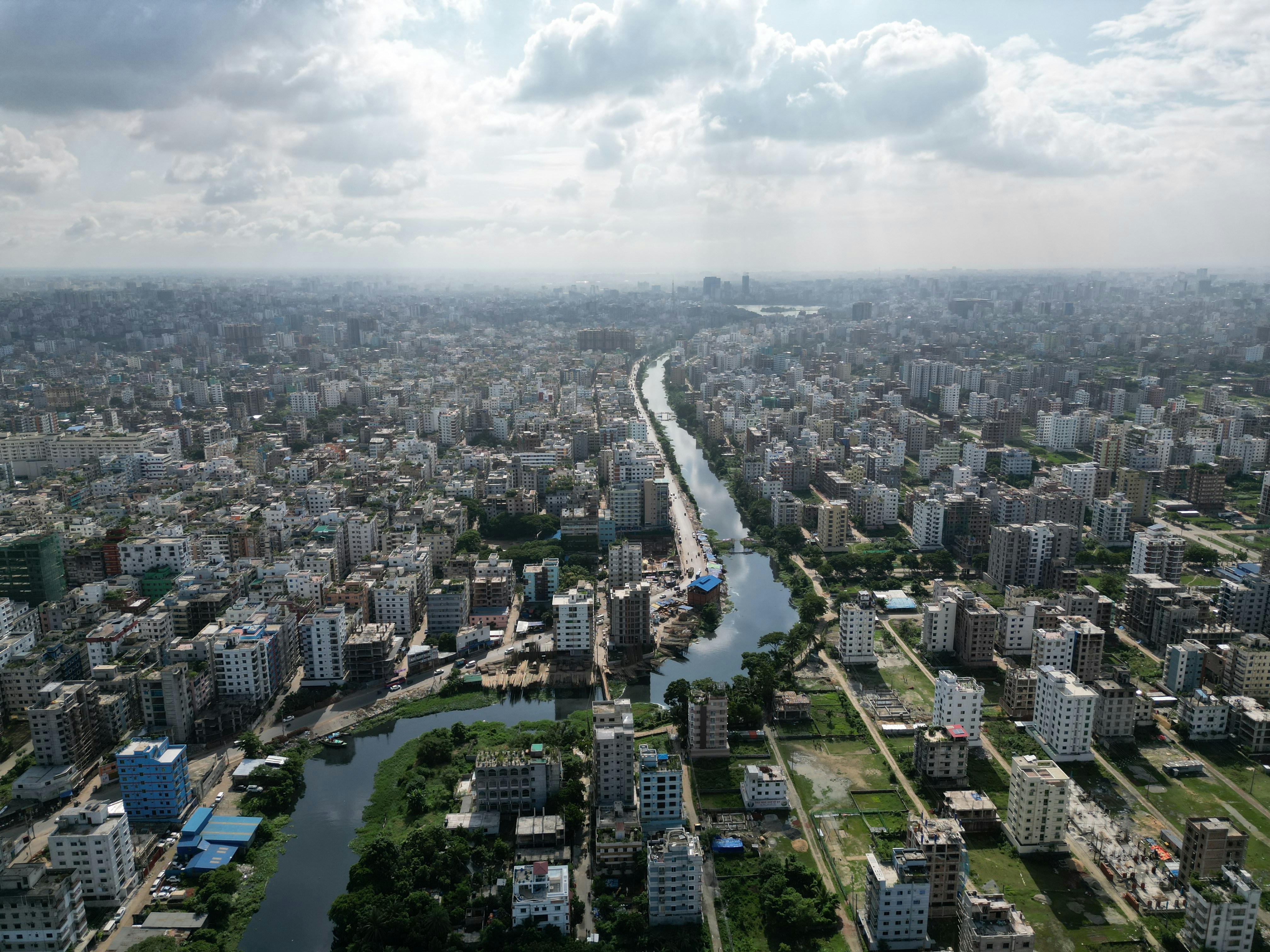
Any building constructed within Rajdhani Unnayan Kartripakkha’s (RAJUK) jurisdiction covering roughly 1,528 square kilometers under the DAP: 2022-2035 requires formal approval before construction can legally begin. Level Seven Architecture & Construction manages the full RAJUK plan approval process for clients across Dhaka, including Banani, Gulshan, Baridhara, Uttara, Purbachal and surrounding zones, handling document collection, drawing preparation, and submission through RAJUK’s Electronic Construction Permitting System (ECPS).
RAJUK Plan Approval Process: Land Use Clearance & Construction Permit
RAJUK plan approval happens in two main stages, and both are now handled entirely online through ECPS.
1. Planning Permit (Land Use Clearance / LUC) Submitted through Form-101, this step confirms your land’s approved use before any building design is finalized. Required documents typically include the land registry, mutation records, national ID, updated land tax receipts, and a digital land survey. The standard processing time is around 30 days, and an approved clearance is valid for 24 months, renewable for a further 12 months if needed.
2. Construction Permit Once Land Use Clearance is approved, a Construction Permit application is submitted through Form-301, with a complete set of architectural, structural, plumbing, and electrical drawings, each signed by the relevant RAJUK-enlisted architect or engineer. The approved Construction Permit is valid for three years, within which construction must reach plinth level.
After construction is complete, a final Occupancy Certificate valid for five years and renewable. This confirms the building is legally fit for use.
RAJUK ECPS: How the Online Approval System Works
RAJUK’s Electronic Construction Permitting System (ECPS) replaced the older paper-based approval process, moving both Land Use Clearance and Construction Permit applications fully online. Every document like- land papers, signed drawings, bank draft receipts is uploaded directly to the ECPS portal, and applicants can track their case status through the system in real time.
For property owners, this means faster processing and clearer visibility into where an application stands but it also means every drawing and document must meet ECPS’s exact digital formatting requirements from the outset, or the application gets delayed in review. We prepare every submission to ECPS’s current specification the first time, so there’s no back-and-forth between design revisions and approval.
RAJUK Approval Documents Checklist
A complete RAJUK approval submission typically requires:
Land registry and mutation records
National ID or passport of the landowner
Updated land tax (khajna) receipts
A digital land survey and mouza map
FAR (Floor Area Ratio) calculation sheet
Signed architectural, structural, plumbing, and electrical drawings
Soil test report (where applicable)
Bank draft copy of the applicable approval fee
Missing or incorrectly formatted documents are the most common reason RAJUK applications get delayed, we handle document verification before submission specifically to avoid this.
RAJUK Approval for Non-Resident Bangladeshis (NRB)
If you own land in Bangladesh but live abroad, RAJUK approval is still fully achievable without needing to travel back. Our team in Dhaka handles the site, documents and RAJUK follow-up locally, so NRB clients can review drawings digitally, approve designs remotely, and we can manage the ECPS application on their behalf. We coordinate the entire process: document collection, drawing preparation, submission, and status tracking while you stay wherever you are.
RAJUK Approval for Apartment Buildings
An apartment building goes through the same two RAJUK stages as a house, Land Use Clearance and Construction Permit, but the drawings and checks are larger. The design must stay within the allowable FAR, ground coverage, setbacks, parking and fire safety rules for your road width and area, and taller buildings need additional clearances, such as from the Fire Service and Civil Defence.
Before you buy land or sign a joint venture agreement with a developer, check how many floors and flats the plot allows with our free RAJUK FAR calculator, then let our architectural design team prepare approval-ready drawings.
How to Check RAJUK Plan Approval Online
To check whether a building or flat is approved, ask the owner or developer for the approved plan and the RAJUK approval memo number, then verify it with RAJUK, online through ECPS where available or at the RAJUK office. If you are the applicant, you can track your own application status from your ECPS account. Always compare the approved drawings with what is built: the number of floors, setbacks and building use must match.
RAJUK Approval Cost and Processing Fees
Government fee (Land Use Clearance / Planning Permit):
Fixed at Tk. 1,000 + 15% VAT = Tk. 1,150 - this is the same flat fee regardless of building size.
Government fee (Construction Permit):
Total floor area (all floors combined) | Fee (before VAT) |
|---|---|
| Up to 50 sqm | Tk 175 |
| 50-100 sqm | Tk 350 |
| 100-200 sqm | Tk 525 |
| 200-300 sqm | Tk 700 |
| 300-500 sqm | Tk 1,300 |
| 500-1,000 sqm | Tk 3,600 |
| 1,000-1,500 sqm | Tk 7,800 |
| 1,500-2,000 sqm | Tk 11,000 |
| 2,000-3,000 sqm | Tk 26,000 |
| 3,000-4,000 sqm | Tk 41,500 |
| 4,000-5,000 sqm | Tk 62,000 |
| 5,000-10,000 sqm | Tk 83,000 |
15% VAT is added on top of every fee in this table. Plus, separately construction permit form fee is Tk 300 + 15% VAT (Tk 45) = Tk 345 total, charged once at the start of the process, before the Construction Permit stage above.
Some residential examples (with VAT applied)
Small single-family home (about 250 sqm / 2,700 sqft total across all floors): Tk 700 + 15% VAT = Tk 805
Typical duplex (about 600 to 900 sqm / 6,500 to 9,700 sqft total): Tk 3,600 + VAT = Tk 4,140
Small apartment building, G+4/5 (about 1,200 sqm / 12,900 sqft total): Tk 7,800 + VAT = Tk 8,970
Source: RAJUK Construction Permit fee schedule (official PDF). Fees are charged on total floor area across all floors, plus 15% VAT. If your area falls exactly on a band boundary, confirm the band with RAJUK.
RAJUK Occupancy Certificate After Construction
A RAJUK Occupancy Certificate is the final legal document confirming a building is safe and approved for use after construction is complete. Without it, a property cannot be legally occupied, rented, sold, or financed by a bank, regardless of how well the construction itself was done. This guide covers exactly how to apply, what is required, and how long it stays valid.
What Is a RAJUK Occupancy Certificate ?
An Occupancy Certificate (OC) is issued by RAJUK after a building’s construction is fully complete and matches the approved Construction Permit drawings. It confirms the building has passed a physical site inspection and is legally fit for use. This is a separate, final step that comes after construction finishes, not part of the earlier Planning Permit or Construction Permit stages.
How to Apply for an Occupancy Certificate ?
The application is submitted using Form 401, along with supporting documents confirming the building matches its approved plan. After submission, RAJUK conducts a site inspection, generally within 15 days, before issuing the certificate.
Step | What Happens |
|---|---|
| 1 | Submit Form 401 application with required documents |
| 2 | RAJUK reviews the application against the approved Construction Permit |
| 3 | Site inspection is carried out, typically within 15 days of application |
| 4 | Occupancy Certificate is issued if the building matches approved drawings |
Projects
Related Projects

What are the two main approvals needed from RAJUK?

Planning Permit (Land Use Clearance), which confirms the land's approved use, and a Construction Permit, which approves the actual building design. Both are now submitted online through RAJUK's Electronic Construction Permitting System (ECPS)
How long does RAJUK plan approval take?
The Planning Permit stage typically takes around 30 days from submission. Construction Permit processing time varies by project scale and completeness of the submitted documents.
What documents are needed for RAJUK approval?
Common requirements include the land registry, mutation records, national ID or passport, updated land tax receipts, a digital land survey, and for the Construction Permit stage- signed architectural, structural, electrical, and plumbing drawings from RAJUK-registered professionals.
How long is an approved RAJUK plan valid for?
A Planning Permit (LUC) is valid for 24 months. An approved Construction Permit is valid for three years, within which construction must reach plinth level, or the approval becomes invalid.
Do I need an Occupancy Certificate after construction is finished?
Yes. After construction is complete, an Occupancy Certificate must be obtained from RAJUK before the building can legally be occupied. It's valid for five years and must be renewed afterward.
How much does RAJUK plan approval cost?
RAJUK's Construction Permit fee is set by total floor area across all storeys, per RAJUK's official fee schedule, plus 15% VAT. For reference: a small home of about 250 sqm costs Tk 805 with VAT, a typical duplex of 600 to 900 sqm costs Tk 4,140, and a small apartment building of about 1,200 sqm costs Tk 8,970. This is separate from the Land Use Clearance fee and from architectural/professional service fees. We provide the exact fee for your specific floor area as part of our service.
Can I get RAJUK approval if I live abroad?
Yes. We regularly manage RAJUK approval for Non-Resident Bangladeshi clients. Our team in Dhaka handles the site, documents and submission locally, while you review and approve the drawings remotely.
How do I check if a flat or building has RAJUK approval?
You can request the approved building plan and RAJUK approval number directly from the developer, or verify it at RAJUK's zonal office. Buying property without confirming RAJUK approval carries real risk, including loan rejection and demolition orders.
What happens if I build without RAJUK approval?
Unapproved construction risks demolition orders and legal penalties, and prevents you from obtaining an Occupancy Certificate; meaning the property can't be legally occupied, sold, or financed by a bank.
Can Level Seven handle the entire RAJUK approval process for me?
Yes. We manage document collection, drawing preparation, and submission through ECPS on the client's behalf, so the process requires minimal direct involvement from the property owner.
Blogs
From Our Blog
Guides, cost breakdowns, and design ideas for homeowners and builders in Bangladesh.